The Hidden Dangers of Poor Posture: Why an Ergonomic Chair is a Necessity in 2026
In our studio, we have a saying: “Sitting is the new smoking.” If you spend more than 8 hours a day at a desk and feel stiffness in your lower back or a persistent ache in your neck, your body is sending a distress signal. It isn’t just fatigue; it is a physiological breakdown caused by poor mechanical support.
1. The Biological Cost: The Consequences of Poor Posture
Most professionals don’t realize that when you “slump” in a standard chair, the pressure on your lumbar discs increases by 250% compared to standing.
-
Disc Degeneration: Constant compression leads to uneven wear on the spinal discs, a trend we are seeing skyrocket among younger office workers in 2026.
-
Brain Fog & Internal Compression: Hunching compresses your chest and abdominal cavity, shallowing your breath and reducing oxygen flow to the brain—the primary cause of that 3 PM mental fatigue.
2. Lumbar Neutrality: Beyond “Softness”
The goal of a professional Ergonomic Chair is not to feel “plush,” but to maintain Spinal Neutrality.
-
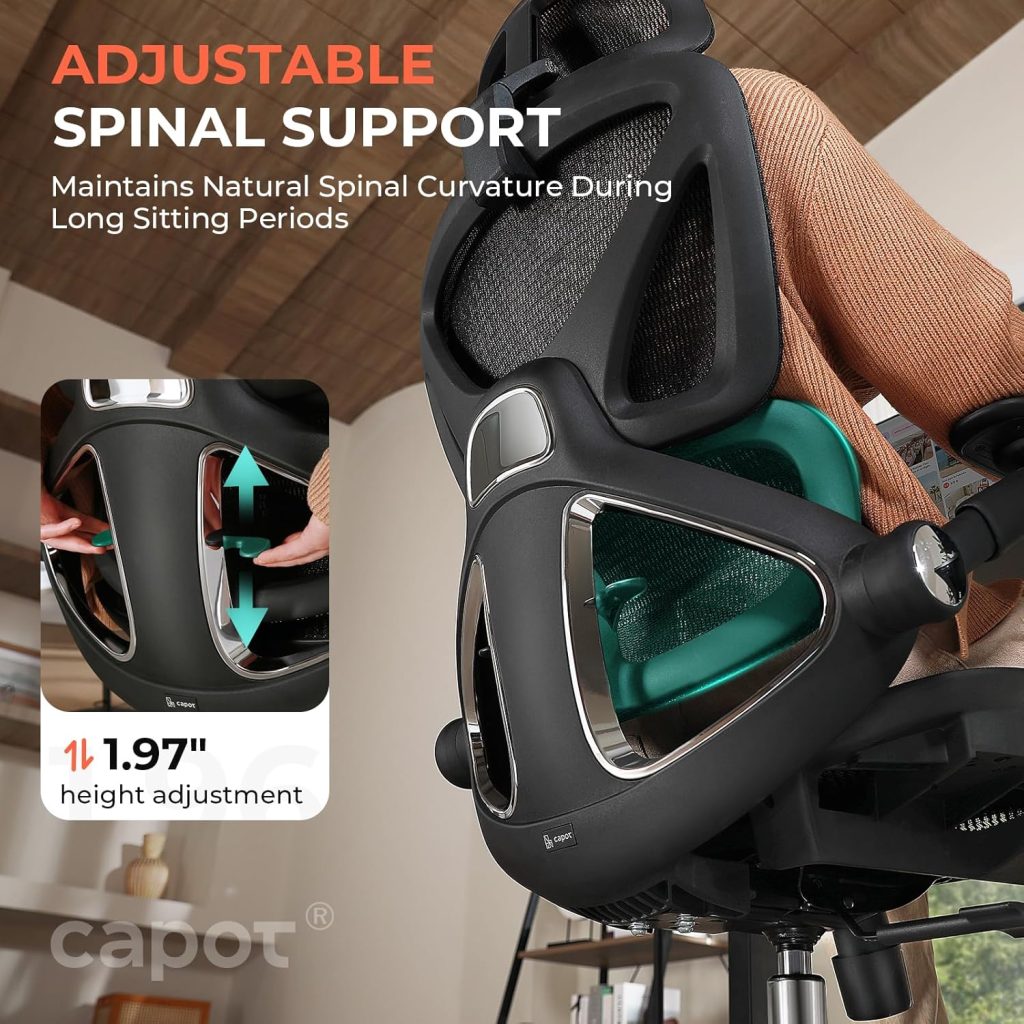
Dynamic Tracking: We look for lumbar modules that move with you. Whether you are leaning forward to type or reclining for a call, the support must remain locked onto the L4-L5 vertebrae. If the chair leaves a gap, your muscles are forced into “overtime” to hold your skeleton together.
3. The Armrest Revolution: Eliminating Shoulder Girdle Load
This is where most chairs fail. Your arms account for roughly 10% of your body weight. Without precise support, your Trapezius muscles act like cranes, holding that weight all day.
-
Static Load Relief: A calibrated 4D armrest takes over this load, preventing the chronic tightening of the neck and shoulders.
-
4D Calibration: We demand adjustment in height, width, and angle. If armrests are too wide, your shoulders are forced into “abduction,” leading to micro-strains.
-
Synchronized Linkage: In 2026, the gold standard is armrests that move with the backrest during recline. This ensures that even when you lean back, your shoulders remain in a relaxed, downward position, eliminating the “shrugging” reflex that causes tension headaches.
Our 2026 Editorial Selection
After stress-testing dozens of units for gas-lift safety (Class 4), pressure distribution, and kinetic feedback, we have identified a specific Ergonomic Chair that functions as a corrective tool rather than just furniture.
If you are already feeling the effects of sedentary strain, this is the hardware we have integrated into our own high-output environment:
👉 View the Biomechanical Specs of Our Recommended Ergonomic Chair
The “Expert Don’ts” List: Avoid These Common Traps
-
Racing/Gaming Chairs: Most are ergonomically regressive. Their “bucket” design wraps around the shoulders, forcing them forward into a hunched position—the exact opposite of a healthy, open posture.
-
Fixed Lumbar Arches: Hard, non-adjustable plastic arches are “one-size-fits-none.” Without vertical or depth adjustment, they often do more harm than good.
-
Low-Density Foam: We strictly recommend High-Elasticity Technical Mesh for 2026. Foam eventually “bottoms out,” creating pressure points that restrict blood flow and trap heat.
Final Verdict
You cannot always change how much you work, but you can change how your body is supported. Investing in a calibrated Ergonomic Chair isn’t just about furniture; it’s an extended warranty for your spine and professional longevity.
FAQ: Navigating the Mechanics of Posture and Support
We’ve compiled the most frequent inquiries from our professional community regarding seating physics and physiological preservation.
Q1: Why does my back hurt even more after switching to a “soft” executive chair?
A: Because “softness” is often the enemy of support. Ultra-plush chairs cause the pelvis to tilt posteriorly, forcing the spine into a strained “C-shape.” A professional Ergonomic Chair is designed not to let you “sink,” but to use reactive tension to keep your spine in its Neutral Position.
Q2: Does armrest height really matter if I’m used to typing with floating arms?
A: Absolutely. Floating arms force your Trapezius muscles to act as constant stabilizers for 10% of your body weight. This is the primary cause of chronic neck tension. Proper calibration requires armrests to be level with your desk, allowing the shoulder girdle to “de-load” completely.
Q3: Mesh vs. Foam: Which is superior for long-duration focus?
A: In 2026, the technical standard favors High-Performance Mesh. Unlike foam, which creates “heat traps” and localized pressure points, high-tension mesh acts like a suspension bridge—distributing weight evenly while maintaining pelvic airflow, which is critical for healthy circulation.
Q4: Can an Ergonomic Chair “cure” my existing disc herniation?
A: An Ergonomic Chair is a preventative tool, not a medical cure. Its necessity lies in stopping further degradation and relieving the daily mechanical stress on your discs. For those with existing conditions, using a Professionally Calibrated Seating System is essential to prevent symptoms from recurring during work.
Technical analysis provided by our 2026 Biomechanical Research Team.
“Our goal isn’t just to list products, but to provide you with a decision-making framework. We’ve seen too many people suffer from back pain (or failed bakes) due to poorly designed gear. Whether you buy from our links or not, we hope this technical breakdown helps you find a tool that truly respects your body and your craft.”