How We Calibrate Professional Mechanical Keyboard Performance for 2026 Workflows
In the world of high-output digital creation, a Mechanical Keyboard is no longer just a peripheral; it is a biomechanical interface. After testing dozens of Hall Effect sensors and low-latency wireless protocols, we’ve realized that a truly “professional” setup isn’t about RGB lighting—it’s about input physics and tactile consistency.
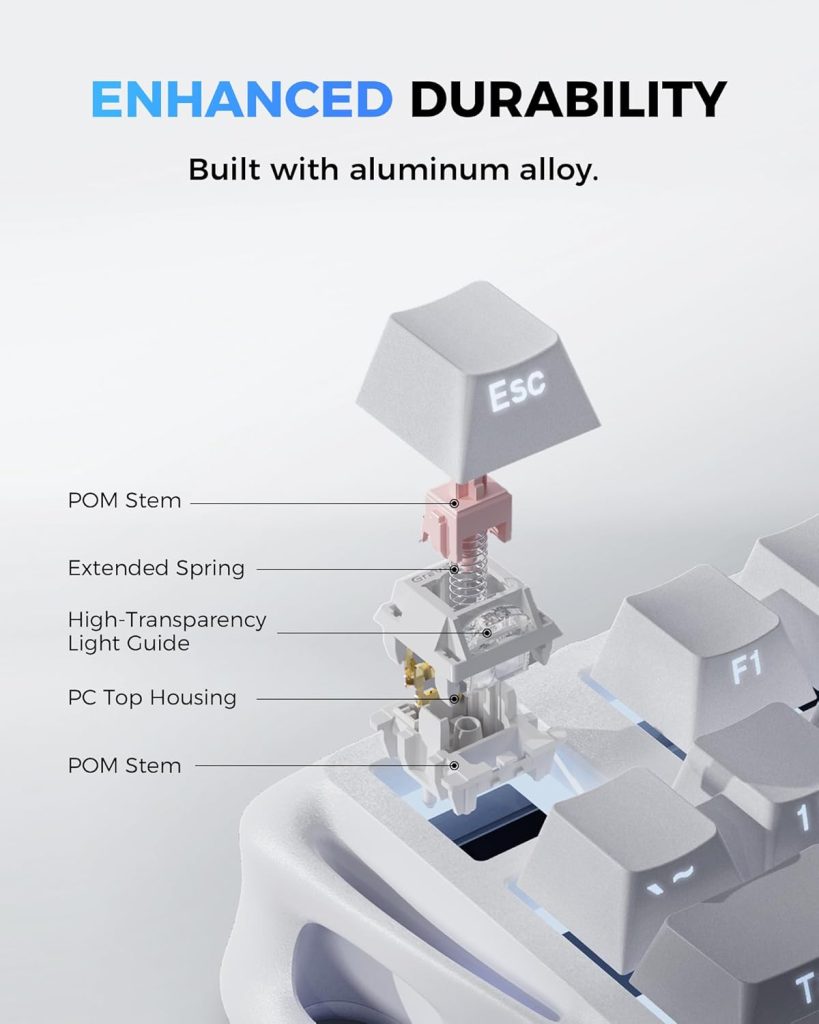
Here is the internal logic we use to calibrate our high-performance Keyboards for maximum productivity.
1. Actuation Engineering: The “Reset” Logic
Most users focus on the sound of a Mechanical Keyboard, but we focus on the Actuation vs. Reset curve.
-
Our Standard: For 2026, we prioritize switches that offer a customizable reset point. Whether you are coding or writing 5,000 words a day, the distance your finger travels after the click determines your long-term fatigue levels. A calibrated switch should feel like an extension of your nervous system, not a hurdle to overcome.
2. Latency Compensation in Wireless Protocols
In a crowded office environment, even a 10ms jitter can break your creative flow. When evaluating a Mechanical Keyboard, we look past the “wireless” label and dive into the Polling Rate.
-
The 1000Hz Threshold: We only recommend boards that maintain a consistent 1000Hz polling rate over a 2.4GHz connection. This ensures that every keystroke is registered with the same temporal precision as a wired connection.
3. Acoustic Fingerprinting & Fatigue Reduction
The “thock” sound of a high-end Mechanical Keyboard isn’t just an aesthetic choice; it’s a functional one.
-
Acoustic dampening: We look for multi-layered PORON or silicone gaskets. By absorbing high-frequency vibrations, these materials reduce auditory fatigue during 10-hour work sessions, allowing you to stay focused on the task, not the noise.
Our Internal Reference for 2026
After cross-referencing aluminum chassis resonance, PBT keycap durability, and multi-device switching latency, we have identified a specific Mechanical Keyboard configuration that defines the current professional standard.
For those who demand industrial-grade stability and refined tactile feedback, this is the hardware currently on our desks:
👉 Explore Our Recommended Professional Mechanical Keyboard
The “Professional Red Flags” (What We Avoid)
-
Bloated Software Dependencies: If a Keyboard requires a 500MB background driver to function, it is a liability. We advocate for On-board Memory—set it once, and it works on any machine without software.
-
Cheap ABS Keycaps: Material that turns shiny and “greasy” within months is unacceptable for a long-term productivity tool. We insist on high-content PBT doubleshot construction.
-
Non-Hot-Swappable Designs: In 2026, if one switch fails and you have to toss the entire Mechanical Keyboard, it’s a design failure. Modular repairability is a non-negotiable professional requirement.
Final Verdict
The best Mechanical Keyboard is the one you forget you’re using. By calibrating for actuation precision and acoustic comfort, you remove the friction between your thoughts and the screen.
Technical analysis provided by our 2026 Input Dynamics Team.